
Nobody defends skipping an oil change. You know what it costs, you know roughly when it is due, and you know what happens if you keep putting it off.
An automated gate is also a machine. It runs outdoors, in the weather, several times a day, and almost nobody has it serviced. Most gate owners we meet have never had a tune-up done, not once, on a system that has been working for them for years.
That is not carelessness. It is just that a gate does its job quietly until the day it doesn’t, and by then the small problem has become the expensive one.
Your gate works harder than you think
Think about how many times your gate opens and closes in a day. Two people leaving for work and coming home, a delivery, a visitor, and you are already at ten cycles. Ten cycles a day is about 3,600 a year.
Now put that machine outside for all of it. Pacific Northwest rain gets into places it should not. Winter cold thickens grease. Summer heat and UV work on the seals and the wire insulation. Wind loads the gate leaf every time it gusts. The ground under the posts moves a little with the seasons, and the gate that hung perfectly in April can be dragging by January.
None of that is dramatic. It is just wear, arriving slowly, on a machine most people never look at.
What actually wears out
Gates rarely fail all at once. They give you warning first, in ways that are easy to miss because they happen a little at a time.
The usual suspects:
- Drive components. Chains, belts, and pulleys stretch and lose their grip. A belt that slips a little today is a gate that stops moving next month.
- Photo eyes and safety sensors. They get dirty, they get knocked out of alignment by a landscaper or a delivery truck, and a gate that cannot see will refuse to close or reverse for no obvious reason.
- Limit switches. These tell the operator where the gate should stop. They drift. That is why a gate slowly starts opening a little short, or closing a little hard.
- Loose hardware. Every cycle is a small vibration. Over thousands of cycles, fasteners back off, hinges develop play, and the gate starts to sag or rack.
- The control board. Moisture and corrosion get into enclosures. So do insects, more often than people expect.
- Alignment. Posts settle, tracks collect debris, and the gate starts fighting its own hardware.
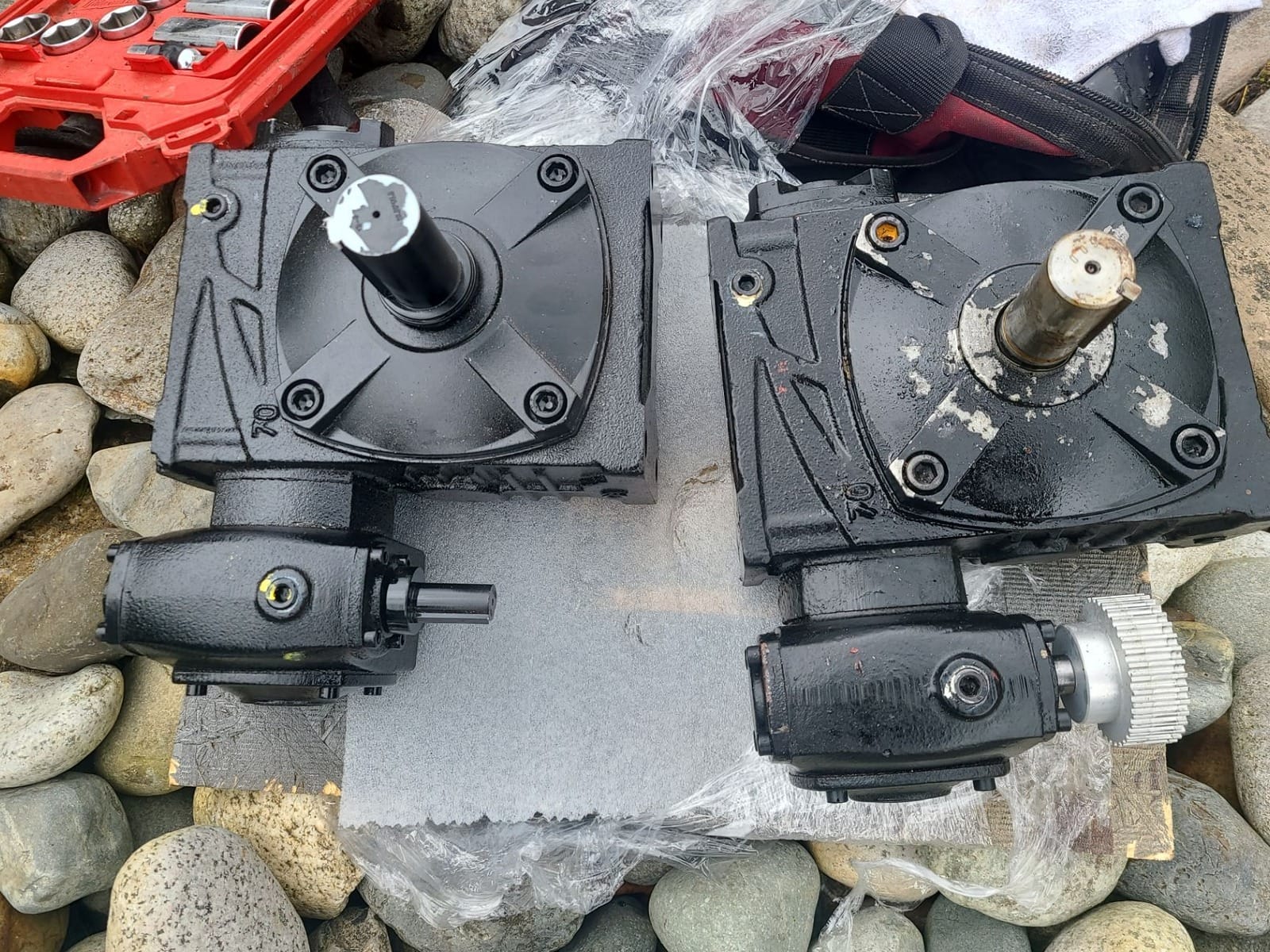
Here is a real one. A commercial gate stopped responding, and the control board was already telling us why: a motor run time fault. Inside the housing, the problem was a worn drive pulley that was no longer gripping the belt the way it should. Small part, and the whole gate was down until it was replaced.
That pulley did not fail overnight. It wore for months, and it would have been visible on any maintenance visit in that window.
What a tune-up actually covers
A maintenance visit is not a quick look and a squirt of grease. It is a full system check, top to bottom:
- Lubrication of hinges, tracks, and drive chains
- Adjustment of limit switches and operator settings
- Tightening loose hardware and fasteners
- Motor and gearbox inspection
- Battery backup testing
- Sensor cleaning and recalibration
- Gate alignment corrections
- Control board inspection and cleaning
We also check the entrapment zones, which is the part most owners have never had explained to them. Every automated gate has pinch points where a person, a pet, or a car can get caught. The safety devices that protect those zones are not optional equipment, and they are the first thing on a neglected gate that quietly stops doing its job.
The parts you only find out about at the worst moment
Two things on your gate are invisible right up until the moment you need them.
Battery backup. Your gate needs power. Around here, power goes out, usually on the windiest night of the year. A healthy backup battery gets you in and out anyway. A dead one has probably been dead for a long time, and nothing tells you until the lights go off. Batteries are consumable. They get tested and replaced on a schedule, not when they fail.
Safety sensors. A gate with a misaligned photo eye can still look like it is working fine. It opens, it closes, nobody notices anything wrong. What has quietly changed is what happens when something is in the way.
What you can check yourself
Plenty of gate problems are things an owner can catch early, and we would rather you caught them.
- Watch one full cycle. Stand back and let the gate open and close all the way. Listen for grinding, watch for hesitation, and look for a gate that runs unevenly or stops short of where it used to.
- Wipe the sensor lenses. A dirty photo eye is one of the most common reasons a gate refuses to close. A clean rag takes ten seconds.
- Clear the track and the swing path. Gravel, bark, branches, and ice all cause the same thing: a gate that stalls or reverses.
- Change the batteries in your remotes and keypads. A weak remote reads as a broken gate more often than you would think.
- Look at the posts. If the gate has started to rub, drag, or sit crooked, that is the ground moving, and it will not correct itself.
If you go through that list and the gate still is not right, it has moved past the owner-fixable range. That is the call to make.
Silver and Platinum
We run two maintenance plans, priced by how many operators you have.
Both include scheduled visits on an annual or semi-annual basis, priority scheduling, discounted repairs and parts, and access to emergency dispatch. Platinum adds a deeper discount, no dispatch charges, and 24-hour emergency access.
The point of either one is the same: the visit happens whether or not you remember to book it. Nearly everything on the wear list above is cheap to catch and expensive to ignore, and the difference between those two outcomes is usually just whether anyone looked.
So, when was the last time?
If you cannot remember, that is the answer, and it is the most common answer we get.
Give us a call at (425) 881-3554 and we will get a tune-up on the schedule. We service automated gates and access control across the Puget Sound region, including Redmond and Issaquah, and the rest of our service area has been on our map since 1979.
Your gate should be the thing you never think about. That only stays true if someone is thinking about it for you.