What to know before you buy a gate

You probably have a gate quote open already. Keep it handy.

Trinity Gate is the company that gets your call in year three, when the gate someone else sold you starts dragging, or the operator that was undersized for the traffic finally gives out. We spend our days servicing gates other companies installed. We know what is worth asking before the work starts.

Use these ten questions to evaluate the quote you already have.

Download the one-page checklist

Print it and bring it to your appointment.

Google star 1Google star 2Google star 3Google star 4Google star 5
4.8
verified by Trustindex
Trustindex verifies that the company has a review score above 4.5, based on reviews collected on Google over the past 12 months, qualifying it to receive the Top Rated Certificate.

1. What class of operator is this, and why that one for my property?

Gate operators are rated for different amounts of traffic. An operator sized for an occasional residential driveway can wear out quickly on a property that opens and closes dozens of times a day. Acreage, equestrian, and other high-use properties may need heavier-duty equipment, while tight lots can limit which gate and operator configurations will work.

Ask for: The operator’s duty cycle rating, matched to your property’s expected traffic.

2. What safety equipment is included?

Photo eyes, edge sensors, and warning signage are part of the entrapment protection required for automated gates. Make sure the quote accounts for the equipment needed to meet current UL 325 requirements.

Ask for: Confirmation that the complete system, as quoted, meets current UL 325 requirements.

3. Do you service what you install, or only install it?

Some companies specialize in installation and others in service. Know who will maintain and repair the system after the installation crew leaves, especially if the equipment or configuration is uncommon.

Ask for: Who handles future maintenance, warranty work, and repairs on the system being installed.

4. Are parts for this equipment easy to get around here?

An uncommon brand can become expensive when a failed board or motor takes weeks to replace. Before choosing equipment, find out whether replacement parts and technicians familiar with the system are readily available in Washington.

Ask for: Typical replacement-part lead times and who stocks or services the equipment locally.

5. What does maintenance cost a year, and what does it include?

Automated gates are outdoor equipment that operate every day in the weather. Regular maintenance helps catch wear before it becomes a failure. Residential gates typically need annual service, while commercial and higher-cycle systems may require more frequent maintenance.

Ask for: Recommended service frequency, annual cost, and exactly what is included in a maintenance visit.

6. What happens in a power outage?

Battery backup and a manual release are different things. Even with backup power, someone on the property should know how to manually open the gate if necessary.

Ask for: The backup-power plan and a demonstration of the manual release before installation is complete.

7. What is the warranty on your work, separate from the parts warranty?

A manufacturer’s warranty covers the equipment. It does not necessarily cover installation problems such as alignment, wiring, or foundation issues. Those fall under the installer’s workmanship warranty.

Ask for: The length and scope of both warranties, in writing.

8. What is the plan for the foundation?

Tree roots and shifting soil can gradually move gate posts out of alignment. A foundation designed without considering the conditions around it can create problems years after installation.

Ask for: How the foundation plan accounts for the soil, drainage, nearby trees, and other conditions on your property.

9. Is solar realistic on this property?

Solar gate operators can work well with consistent sun, but heavy tree cover can prevent the system from staying adequately charged.

Ask for: An evaluation of actual sun exposure at the gate and an alternative power plan if solar is not dependable there.

10. Who pulls the permit?

Permit requirements depend on the project, location, and whether new electrical work is involved. The local permitting authority determines what is required.

Ask for: Who is responsible for confirming permit requirements and pulling any required permits before work begins.

Red Flags in a Gate Quote

A quote does not need to be the longest or most expensive one to be the right choice. But it should give you enough information to understand what you are buying, why that equipment was selected, and what happens after installation.

Be cautious if:

The equipment is listed without explaining why it fits your property. The operator should be sized for how often your gate will actually cycle, not simply because it is the installer’s standard choice.

Safety equipment is vague or treated as an add-on. The installer should be able to explain how the completed system will meet current UL 325 requirements.

Nobody can explain what happens after installation. You should know who handles maintenance, warranty issues, and repairs before the gate goes in.

The answers change when you ask for them in writing. Equipment, warranties, maintenance expectations, and other important details should match what appears in the final quote.

There is no clear plan for power, drainage, or site conditions. These details may not be the exciting part of a new gate, but they can become expensive problems later.

The company cannot tell you how readily parts are available. A good price today matters less if a basic replacement part leaves your gate down for weeks later.

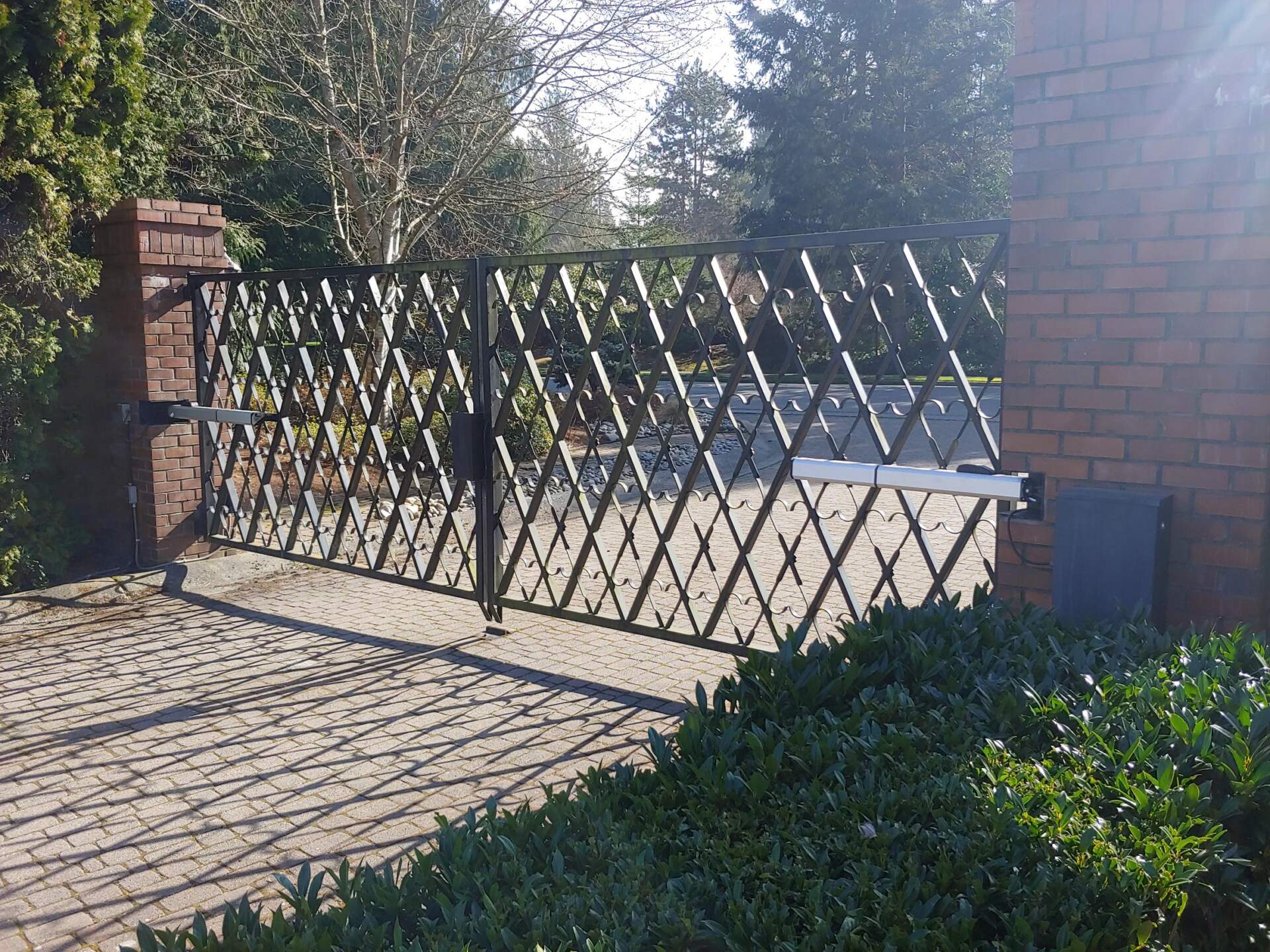
Black lattice dual swing gate with gate operator arms between brick pillars

What people call about later

Most problems we see later have little to do with how the gate looks. They are undersized operators, solar systems without enough sun, outdated access control, shifting foundations, and gates that were never put on a maintenance schedule.

With proper maintenance, a gate can last 15 to 20 years. Decide who will maintain yours before it goes in, rather than after something breaks.

Frequently Asked Questions About Gate Quotes

Do I need a gate company to go through this checklist?

No. These are questions you can ask whoever is quoting your gate, and the answers should be in writing either way.

Does Trinity Gate install new gates?

We take on a small number of new installations each year, primarily for existing commercial clients. Our focus is service, maintenance, and upgrades on gates that are already in place.

What should be included in a gate installation quote?

At minimum, you should understand which operator and access control equipment are being used, what safety equipment is included, how the system will be powered, what site work is required, what warranties apply, and who will maintain and repair the gate after installation.

Why check a quote before you sign?

A gate can operate perfectly on installation day and still have problems later if the operator is undersized, parts are difficult to source, the site was not properly accounted for, or nobody planned for maintenance. Checking the quote gives you a chance to catch those issues before the system is installed.

Keeping Washington SECURED since 1979.

Take the checklist with you

Download and print the checklist, then get your answers in writing before you sign. We service and maintain gates across Washington that other companies installed, so these are the questions we wish every owner had asked.

Download the one-page checklist